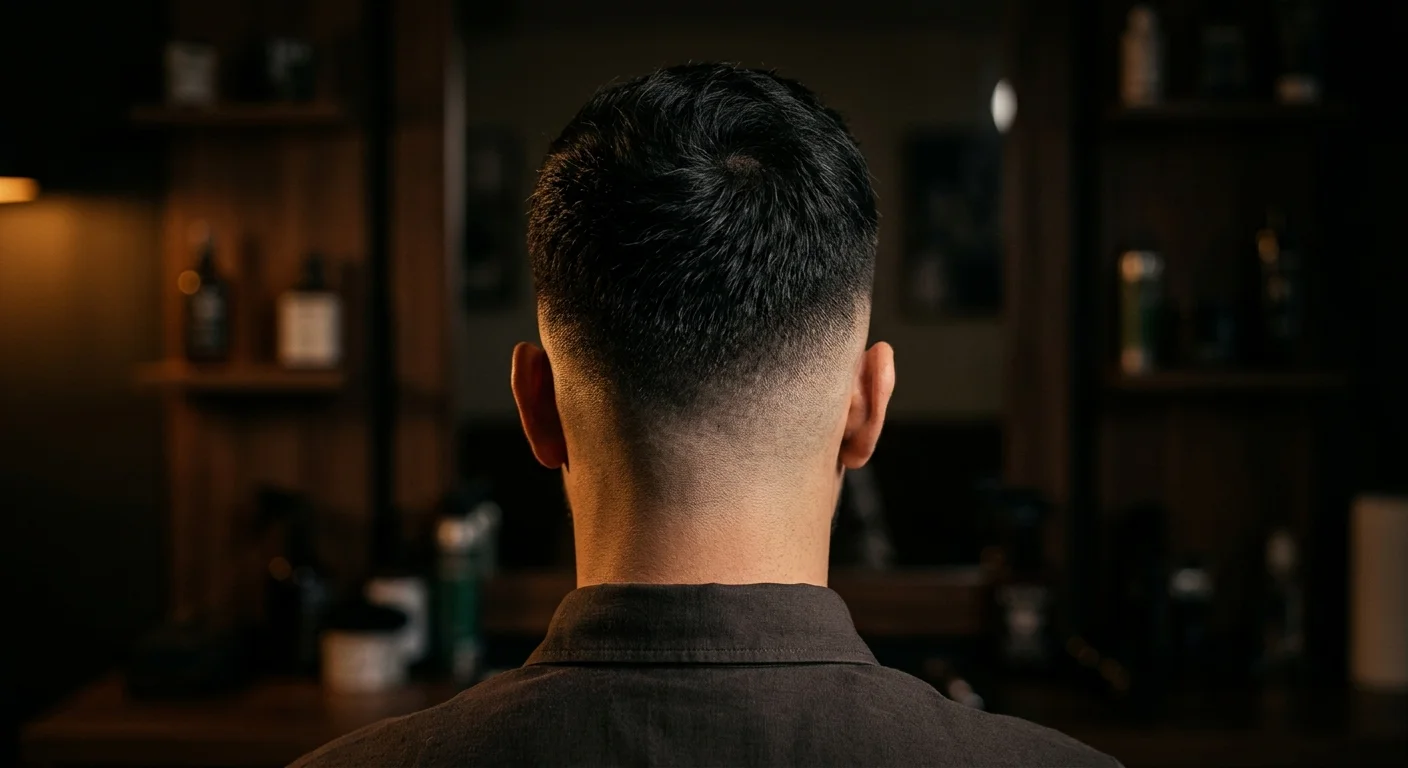
"Just a fade" is the most common sentence said in a barber chair and one of the least useful. It tells your barber almost nothing, because a fade is not one haircut. It is a family of techniques, and its cousin, the taper, gets confused for it constantly. The two are related. They are not the same. And which one you actually want has less to do with what looks cool on Instagram and more to do with your hair, your face, and how often you are willing to come back.
Here in Valley Glen, on a strip of Victory Blvd that runs thick with barbershops, we hear "fade" used to mean at least four different things in a single Saturday. So before you sit down and gesture vaguely at your temples, it is worth thirty seconds to understand what you are actually choosing between.
The vocabulary problem
What separates a fade from a taper
Both start the same way: hair gets progressively shorter as you move down toward the ear and the neckline. The difference is where that shortening stops.
A taper tightens gradually but never disappears. There is always some length left at the hairline, even if it is short. It is a soft transition, not a hard one, and it is what most men have been getting their whole lives without knowing the word for it.
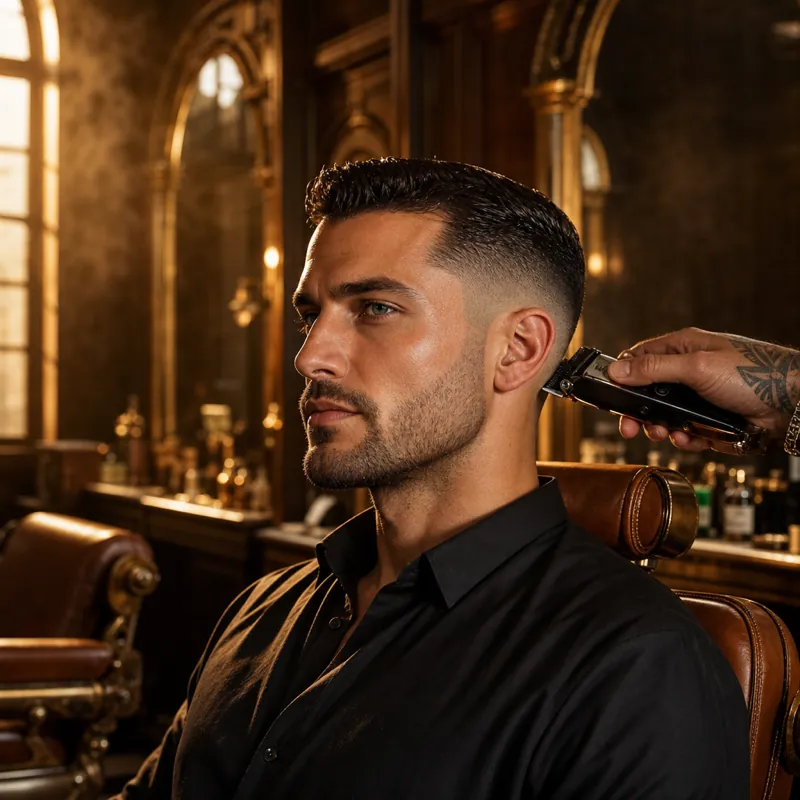
A fade keeps going. It runs the length down past what a taper would stop at, all the way to skin, or close enough that it reads as skin from three feet away. The transition is more dramatic, the contrast between top and sides is higher, and the maintenance clock starts ticking faster the moment you leave the chair.
The breakdown
Three things that actually decide it
Hair texture
Thick, dense hair, common among a lot of our Armenian and Persian clients in the Valley, holds a fade's crisp line longer. Fine or thinning hair often looks sharper in a taper, where there is less contrast to expose regrowth.
Face shape
A skin fade adds visual height and works well on rounder faces that want more angle. A taper is more forgiving on longer or narrower faces, where a hard fade line can exaggerate length rather than balance it.
Your actual schedule
A fade grows out in two to two and a half weeks before it starts looking unintentional. A taper holds its shape closer to a month. Be honest about which one you'll actually keep up with.
The sub-species
Low, mid, high, and where the confusion starts
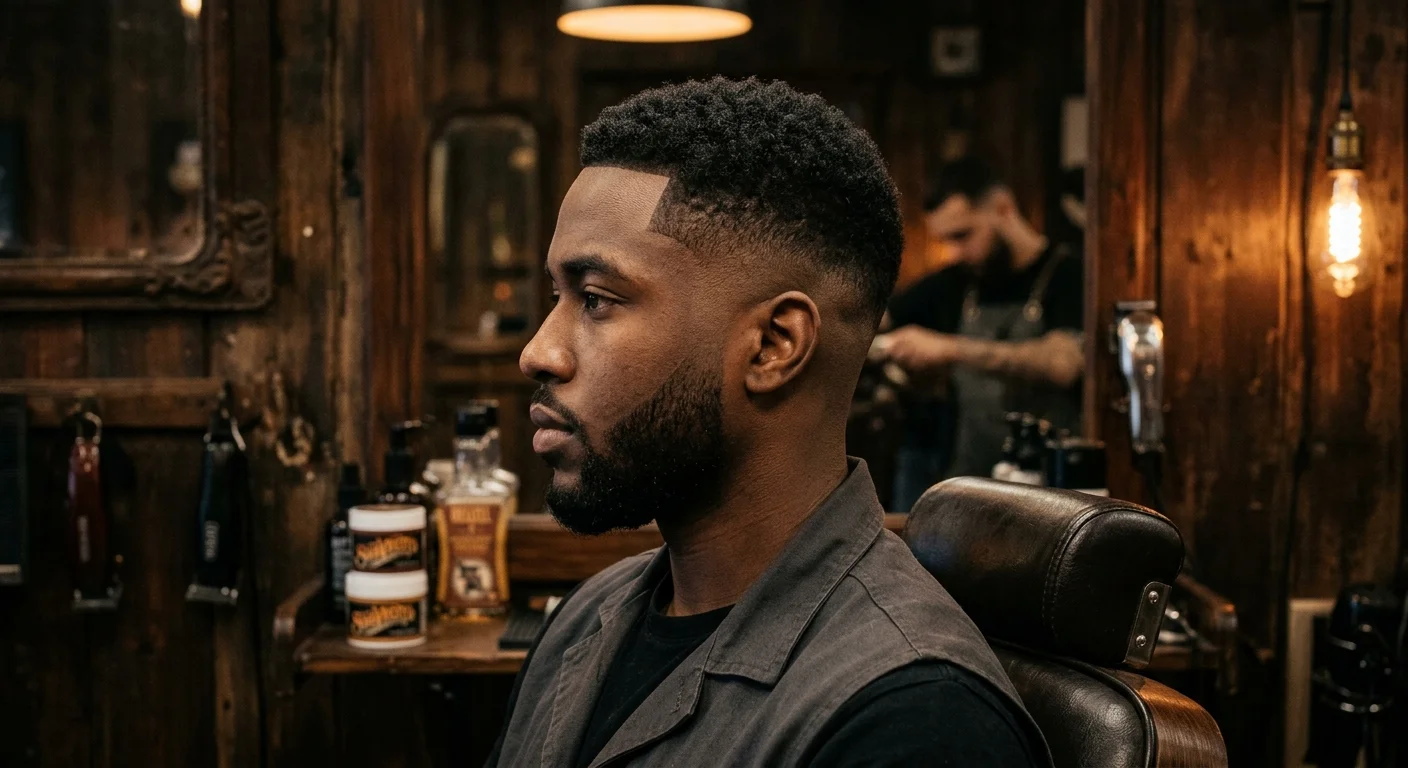
The fade-vs-taper question gets murkier because both come in low, mid, and high variants, referring to where on the head the shortening begins. A low fade starts just above the ear. A high fade starts well up the side, closer to the temple, and reads more aggressive. The same logic applies to tapers, just with a softer landing.
This is where "just a fade" falls apart as an instruction. A low skin fade and a high skin fade are two very different haircuts on the same head. If you show up with a photo, even a bad one, you have given your barber more useful information than a five-word request ever could.
In practice
What to actually say in the chair
Skip "just a fade." Instead, give your barber three data points, in this order:
- Where you want it to start. "Keep some length at the bottom" (taper) or "take it down to skin" (fade), and roughly how high up the side you want the transition to begin.
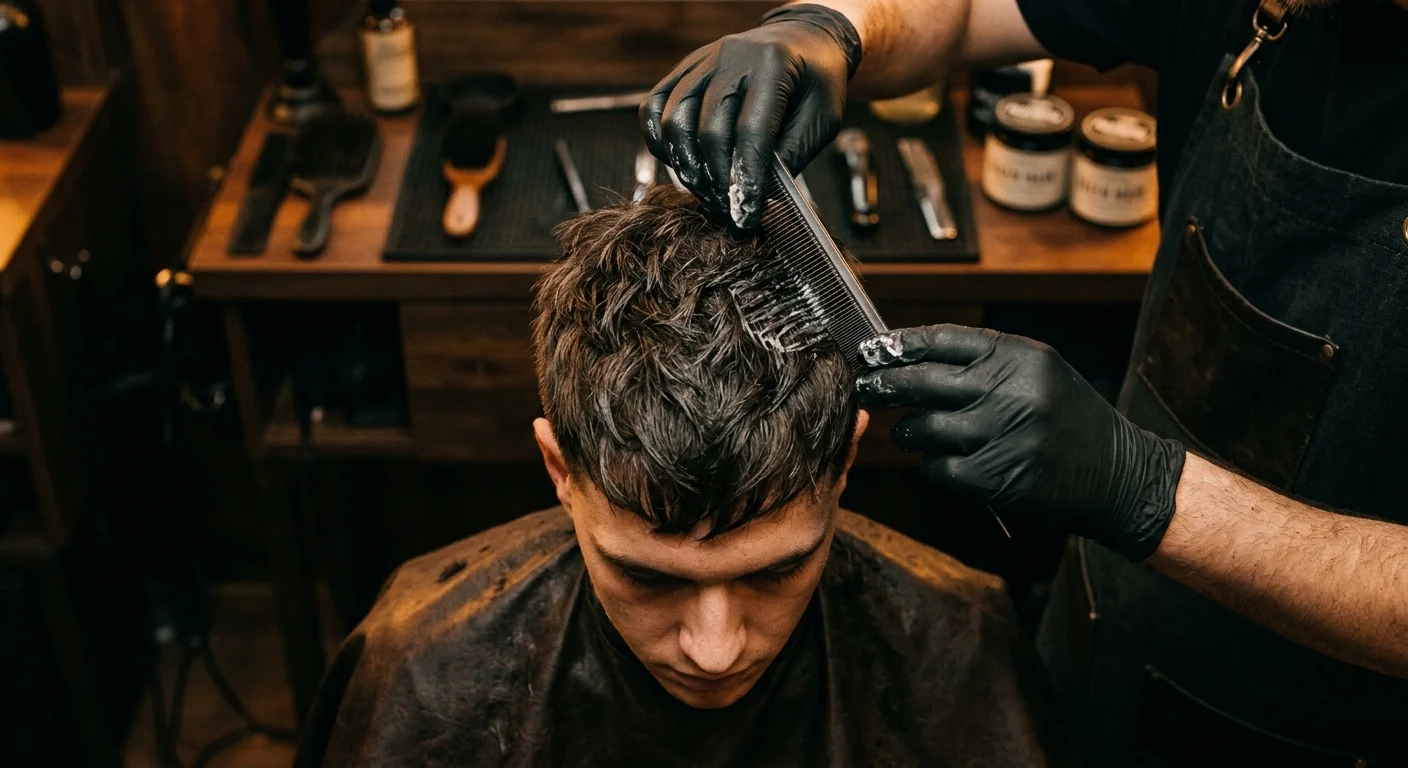
- What you're keeping on top. A pompadour, a textured crop, a scissor cut, a slick side part. The top is what makes the cut yours; the sides are the frame.
- How often you'll realistically be back. Say it out loud. A good barber will adjust the sharpness of the line to match a two-week cadence versus a four-week one, so it grows out looking intentional either way.
If none of that sounds familiar yet, that's fine. Point at a photo. Every barber on our floor would rather look at three seconds of a reference image than untangle a paragraph of hair terminology you half remember from a barbershop app. And if this is your first time in a real chair, our first-visit guide walks the whole appointment in order, from the consultation to what to tip at the counter.
The mistakes
Where guys actually go wrong choosing between them
Most bad fades and tapers aren't the barber's fault. They're the result of a mismatch between what got requested and what the hair could actually support. A few patterns show up again and again:
- Forcing a skin fade on fine or thinning hair. The contrast that makes a fade look sharp is the same thing that makes thinning patches obvious. If your hair has started to recede or thin at the crown, a taper almost always photographs and ages better, even if a fade is what you saw on someone else.
- Going high on a first visit. A high fade is dramatic, and dramatic is exactly what you don't want to gamble on with a new barber who hasn't seen your hair before. Start lower, low or mid, on the first cut, then push higher on a later visit once you both know how your hair behaves.
- Trying to maintain the line yourself at home. A fade's line is the hardest part of the cut to execute, and it's the first thing that goes wrong when someone tries to touch it up between visits with a trimmer bought off Amazon. If you're not ready to book every two weeks, choose the taper instead of fighting your own home maintenance.
- Copying a friend's exact cut without checking the fit. A fade or taper that looks great on your buddy's round face and thick hair might do nothing for your longer face and finer hair. Bring the photo as a starting point, not a contract.
None of these are hard to avoid. They just require saying the quiet part out loud in the chair: your actual hair type, your actual schedule, and your actual willingness to come back every two weeks versus every month. Barbers aren't guessing at any of this from across the room. Tell them, and the fade-or-taper decision mostly makes itself.
There is a money side to that decision too, and it is the part most men never run. A tight fade booked twice a month costs more over a year than a taper booked monthly, even when the taper carries the higher sticker. We laid the whole Valley range out, service by service, in what a men's haircut actually costs here.
A note on texture
Curly and coily hair changes the calculation
Everything above assumes relatively straight or wavy hair, which is where most of the fade-versus-taper conversation happens online. But the Valley's client base includes plenty of curly, coily, and tightly coiled hair, and both cuts behave differently once texture enters the picture.
On curly hair, a fade tends to read even more dramatically than on straight hair, because the contrast between the tight curl pattern on top and the bare skin at the sides is sharper to the eye. Some men love that contrast. Others find it makes the top look disconnected from the sides in a way that a taper avoids, since a taper leaves enough length at the transition point for the curl pattern to blend down naturally instead of stopping abruptly.
Curl pattern also affects how long either cut holds its shape. Curly hair often disguises regrowth better than straight hair does, since new growth curls into the existing shape rather than sticking out as a visible line the way straight regrowth does at a fade's edge. That can mean a curly-haired client stretches a fade closer to the taper's three-to-four-week window without it looking overgrown, which is worth mentioning to your barber if your hair has real texture to it.
If you're not sure how your specific curl pattern will behave with either cut, ask. A barber who works with a genuinely mixed client base, straight, wavy, curly, coily, thick, fine, all in the same afternoon, has almost certainly cut something close to your exact texture before and can tell you honestly which way it tends to go.
Dapper Fellas – Victory Blvd, Valley Glen
Both cuts live on our menu because both are legitimate choices, not because one is a fallback for the other. The Clean Fade ($30, 25 min) is exactly what it sounds like: a tight skin fade with a defined line, built for guys who want sharp and don't mind the two-week clock. The Executive ($50, 45 min) leans taper, a longer top with a gradual blend at the sides, cut with scissors as much as clippers, and built to hold its shape closer to a month.
If you're not sure which camp you're in, say so when you book, or when you sit down. Armando, our most-requested chair for scissor work and fade precision, will look at your hair type and your face and tell you straight, not just execute whatever word you used on the phone. That's the actual value of a real barbershop over a fifteen-minute chain cut: the conversation before the clippers turn on.

Address: 13059 Victory Blvd, Valley Glen, CA 91606. Open every day, 10 AM to 8 PM. Free parking lot behind the building, plus street parking on Victory. Walk-ins are always welcome; Saturdays run a 15 to 30 minute wait, so booking ahead online is the smart move if your schedule is tight.
The neighborhood angle
Why this question comes up so often in the Valley
Valley Glen, North Hollywood, and Van Nuys have a genuinely mixed hair-texture population, thick Armenian and Persian hair, fine Anglo hair, coarse Latino and Black hair, all walking through the same six blocks of Victory Blvd. That means the fade-versus-taper conversation isn't theoretical here. It's the actual first question a good barber asks, because the "right" answer changes person to person in a way it wouldn't in a more homogenous market.
It's also why photos of a friend's haircut don't always translate. A skin fade that looks crisp on someone with thick, dark, densely-packed hair can look patchy and uneven on someone with fine or thinning hair, not because the barber did anything wrong, but because the two heads of hair are working with different physics. A barber who's cut a few thousand heads in this neighborhood has seen the variation and knows when to steer you toward the taper instead, even if the fade was what you walked in asking for.
One more thing
You are allowed to change your mind next visit
Nobody is locked into fade-for-life or taper-for-life. Plenty of regulars run a fade through summer, when the sharper line and shorter maintenance window fit the season, then drift to a taper in the fall when they'd rather stretch four weeks between visits. Your barber remembers what you got last time. Tell him what changed, weather, job, mood, and let the cut follow.
Whichever way you drift, the interval moves with it: two weeks for a fade, four or five for a taper. We laid that out cut by cut in how often you should actually see a barber.
FAQ
Both shorten the hair as it moves down toward the ear and neckline. A taper stops while there is still length at the hairline, so the transition stays soft. A fade keeps going to skin or close enough to read as skin, which gives you a harder line and a higher contrast against the top.
The taper, by roughly double. A skin fade looks its best for about two to two and a half weeks before the line blurs. A taper or scissor cut holds four to five weeks because there is less contrast for regrowth to expose.
You can, but a taper usually serves you better. The same contrast that makes a fade look sharp is what makes thinning at the crown or a receding hairline more visible. Say what your hair is doing when you sit down and your barber will steer the line accordingly.
Give three things instead of a label: where you want the shortening to start, what you are keeping on top, and how often you will realistically come back. A photo on your phone covers all three faster than any terminology. "I don't know, look at my hair and tell me" is also a complete answer.
The Clean Fade is $30 for 25 minutes at Dapper Fellas. The Executive, which leans taper with a scissor-cut top, is $50 for 45 minutes. Both include a head wash and a hot towel finish.