Walk down Victory Blvd on any given afternoon and you'll see a hundred beards. Maybe ten of them are actually shaped. The rest are grown, which is a different thing entirely, hair that's been left alone to do whatever it wants rather than hair that's been given an edge, a line, a reason to look intentional rather than accidental.
The difference almost never comes down to how thick or full the beard is. It comes down to three lines that most men have never had properly cut, because they've never had a real barber touch their beard, only their hair.
The anatomy
The three lines that make or break a beard
The neckline
Where the beard ends and the neck begins. Left alone, it creeps down toward the Adam's apple and blurs into neck hair, which reads as unkempt no matter how sharp the rest of the beard is. The correct line sits roughly a finger-width above the Adam's apple, curving to follow the jaw.
The cheek line
Where the beard stops climbing up the face. Too high and it looks patchy where the growth thins out naturally. Too low and it looks like you gave up. A good barber sets this line to your actual growth pattern, not a generic template.
The mustache line
Where the mustache meets the beard at the corner of the mouth, and where it's trimmed above the lip. This is the line most home grooming misses entirely, and it's the one that ages a face the fastest when it's wrong.
The distinction
Trim, shape-up, or full color, which one do you need
These get used interchangeably and shouldn't be. A trim maintains length, taking down what's grown since your last visit without changing the outline. A shape-up is more deliberate: resetting the neckline, cheek line, and mustache line, usually paired with a trim, and the thing most beards actually need if they've never had it done before. Beard color is a separate service entirely, for evening out gray or patchiness, and it's worth asking about if your beard has gone salt-and-pepper faster than the hair on your head.
If you've never had a professional shape-up, start there. It resets the foundation. Everything after that, regular trims to maintain the shape you now have, is much easier to keep up on your own between visits.
The color question comes up more than most men expect, usually because a beard goes salt-and-pepper years before the head does. That is its own conversation, with its own timing and its own risk of looking obviously dyed, so we gave it a separate guide: gray blending for hair and beard, including what it costs and how it grows back out.
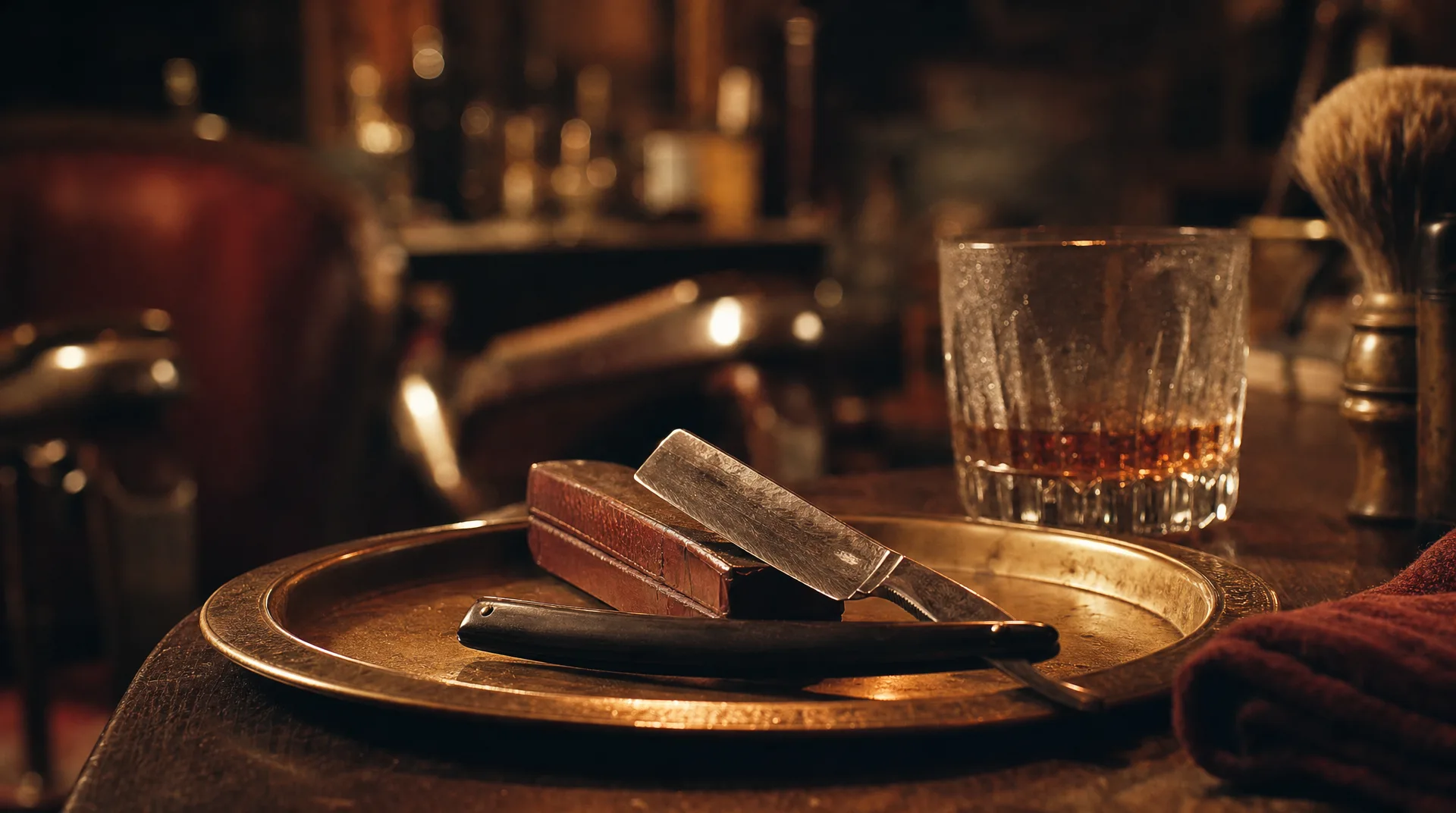
Steel vs. clippers
Straight razor line-up versus clipper shape-up
A clipper with a fine guard or no guard at all can cut a clean line, and for most men, most of the time, that's plenty. But a straight razor does something a clipper physically can't: it cuts at skin level with zero shadow, which is why razor-lined beards photograph and hold their edge noticeably longer, sometimes an extra week before the line starts to soften.
The tradeoff is time and, usually, a slightly higher price. If you're maintaining between full shape-ups, a clipper touch-up on the neckline is fast and cheap. If you're getting the full ritual, the razor line-up paired with a hot towel finish is worth the extra fifteen minutes. Most of our regulars alternate: razor for the full shape-up, clipper touch-ups in between.
The preparation is what makes the difference, not the blade on its own. Steam softens the hair, opens the pores, and lets the edge move without dragging, which is why the line lands cleaner and lasts longer. We wrote out that whole sequence, minute by minute, in the art of the hot towel shave, and it is the same preparation your beard gets before a razor line-up.
Between visits
What to actually do at home
- Brush before you trim, not after. A beard brush trains the hair to lie in one direction, which reveals the true length and makes any home trimming far more accurate. Skipping this step is the single biggest cause of uneven home trims.
- Use oil, not just balm. The San Fernando Valley runs dry for most of the year, and dry heat pulls moisture out of beard hair faster than most men expect, leading to the frizzy, wiry texture that makes a beard look unkempt regardless of how it's shaped. A few drops of beard oil worked in after a shower counters that.
- Leave the lines alone yourself, if you can. Trimming length at home between visits is fine. Re-cutting the neckline or cheek line yourself is where most home grooming goes wrong, because it's genuinely hard to see your own jawline symmetrically in a bathroom mirror. Let the professional line hold until your next visit and just clean up stray hairs.
- Don't trim the week before an event. Beards look their sharpest two to four days after a trim, once the freshly cut edges have softened slightly. Trimming the morning of a big day almost always looks too severe. If the event is your own wedding, the timing gets stricter still, and we mapped the whole countdown in the groom's haircut timeline.
Common mistakes
What actually damages a beard's shape
Most beard problems aren't genetic. They're maintenance habits that quietly work against the shape a barber set. A few worth fixing:
- Washing with regular bar soap or body wash. These strip the natural oils beard hair needs, especially in a dry climate like the Valley's, leaving hair coarse, frizzy, and harder to shape day to day. A dedicated beard wash, used a few times a week rather than daily, keeps texture manageable.
- Ignoring the mustache line entirely. This is the line most home grooming skips, and it's the one that makes a beard look unfinished even when the neckline and cheek line are sharp. A few extra seconds with small scissors above the lip line makes a disproportionate difference.
- Over-trimming out of impatience. Trimming a little every few days to "keep it neat" usually ends up shorter and less defined than trimming properly every two to three weeks. Let the shape hold and resist the daily fuss.
- Skipping oil because the beard is short. Even a short beard sits against dry skin, and the itch that drives a lot of men to shave off a beard in its first few weeks is almost always a dryness problem, not a beard problem. A few drops of oil solves it before it becomes a reason to quit growing altogether.
None of this is complicated once it's named. Most men just never had anyone walk them through it, because most men have never had their beard, specifically, looked at by someone trained to do it, only their hair.
Growing one out
The patch phase, and how to get through it
Almost every beard goes through an awkward stretch somewhere between two and six weeks of growth, where patches thin out unevenly, the neckline hasn't been defined yet, and the whole thing looks less like a beard and more like a decision you're starting to regret. This is normal, not a sign your beard genetics are bad, and it's the single biggest reason men give up on growing one out before it's had a real chance.
The fix isn't to shave and start over. It's to get the neckline and cheek lines shaped early, even while the rest is still filling in unevenly. A defined outline makes a patchy beard look intentional in progress, rather than just unfinished, and it's usually enough to get most men through the discouraging middle stretch to the four-to-six-week mark, where density fills in and the patchiness that felt permanent mostly resolves on its own.
If you're planning to grow out for the first time, say so when you book a shape-up. The approach is different from maintaining an established beard: lighter shaping, wider lines that leave room for the beard to fill in, and a conversation about what your particular growth pattern is likely to do over the following month.
Worth owning
The small kit that actually makes a difference at home
You don't need a shelf of products. Four things cover almost everything a beard needs between professional visits:
- A boar-bristle or badger-hair brush. Trains the direction of growth, distributes natural oils evenly, and reveals true length before you trim anything. A five-dollar plastic comb doesn't do the same job.
- Beard oil, not just balm. Oil penetrates the hair and the skin underneath, which is where dryness and itch actually start. Balm sits mostly on top and holds a style but doesn't solve the underlying dryness the way oil does, especially in the Valley's climate.
- Small, sharp scissors. For stray hairs and the mustache line specifically, where clippers are too blunt an instrument. A pair dedicated to the beard, kept separate from household scissors, stays sharper longer.
- A trimmer with a genuinely fine guard, used sparingly. Fine for maintaining length between visits. Not for touching the neckline or cheek lines yourself, which is where most home grooming goes wrong, as covered above.
That's the whole list. Everything else, beard washes, specialty combs, styling balms, is optional refinement once the basics are handled, not a prerequisite for a beard that looks properly kept.
Dapper Fellas – Victory Blvd, Valley Glen
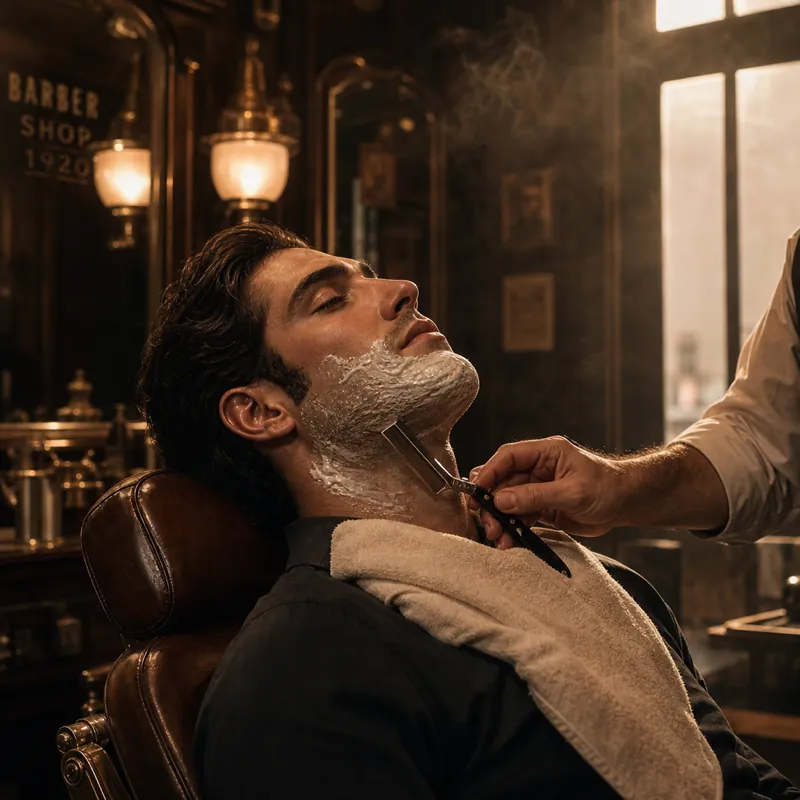
The Beard Shape-Up ($30, 25 min) resets all three lines with clipper precision, ideal as a standalone or paired with any haircut. For the full ritual, the Gentleman's Shave ($50, 45 min) brings in the straight razor, hot towel, and hand-mixed balm, the same steam-and-steel process that's barely changed since the 1920s. If your beard has gone patchy or gray faster than you'd like, ask about beard color while you're in the chair.
Every beard service includes a hot towel to soften the hair before any blade touches it, which is the difference between a shape-up that feels rushed and one that feels like it's actually doing something for you. If you want privacy for the full ritual, our VIP room has its own wash sink and is available on request when you book.


Address: 13059 Victory Blvd, Valley Glen, CA 91606. Open every day, 10 AM to 8 PM. Walk-ins welcome; a standalone shape-up rarely needs more than a short wait, even on weekends.
One last note
A shaped beard is a maintenance habit, not a one-time fix
The first professional shape-up does the hard work of setting the outline. But a beard is living hair, it keeps growing, keeps drifting out of shape, and the lines that looked crisp on day one will have softened by week three. Treat it the same way you'd treat a haircut: a standing rhythm, not a once-a-year correction when things have gotten visibly out of hand.
Most of our regulars pair a beard shape-up with every other haircut, roughly every three to four weeks, which keeps both in sync and means neither ever gets bad enough to need a dramatic reset. The beard actually runs on a slightly faster clock than the hair on your head, which is worth knowing before you set the rhythm, and we broke both intervals down in how often you should actually see a barber.
FAQ
Every two to three weeks, and on its own clock rather than your haircut's. Beard hair grows faster than most men account for, and the neckline goes shaggy well before the rest of the beard looks out of shape.
A trim takes down what has grown since your last visit without changing the outline. A shape-up resets the outline itself, the neckline, the cheek line, and the mustache line, and it is what most beards need if they have never had it done properly.
The Beard Shape-Up is $30 for 25 minutes at Dapper Fellas, standalone or added to a haircut. The Gentleman's Shave, which brings in the straight razor, hot towel, and hand-mixed balm, is $50 for 60 minutes.
Trimming length at home is fine. Re-cutting the neckline or cheek line yourself is where most home grooming goes wrong, because it is genuinely hard to judge your own jawline symmetrically in a bathroom mirror. Clean up stray hairs and let the professional line hold.
Yes, and earlier than you would think. A defined outline makes a filling-in beard read as intentional rather than unfinished, which is usually what carries men through the awkward two-to-six-week stretch instead of shaving it off.