
If you ask most of Los Angeles where to find an Armenian barbershop, they'll say Glendale, and they wouldn't be wrong. Glendale is the loudest version of that story, the one with the scholarship written about it and the TikToks filmed in front of it. But a few miles south and west, in the eastern San Fernando Valley, the same tradition has been running quietly for decades, on Victory Blvd instead of Brand, without needing the spotlight to be real.
Valley Glen, North Hollywood, Van Nuys, and Panorama City together hold an estimated hundred thousand Armenian-American residents, one of the largest concentrations in the country. It's not a footnote to Glendale's story. It's a parallel one, and barbershops have always been part of how it holds together.
A city within a city
What the Valley's version looks like
Valley Glen itself only became its own recognized neighborhood in 1998, carved out of what had been Van Nuys and North Hollywood. It's not Beverly Hills. It's not Studio City. It's the quiet middle of the eastern Valley, body shops and family-run delis next to churches and community centers, streets that have belonged to the same families for three generations.
That's the setting the Armenian barbering tradition took root in here, not as a tourist-facing cultural district, but as an ordinary part of the neighborhood's infrastructure. A barbershop on Victory Blvd isn't a novelty here. It's closer to a utility, the same way a good bakery or a reliable mechanic is.
The craft
What the old-country apprenticeship model taught
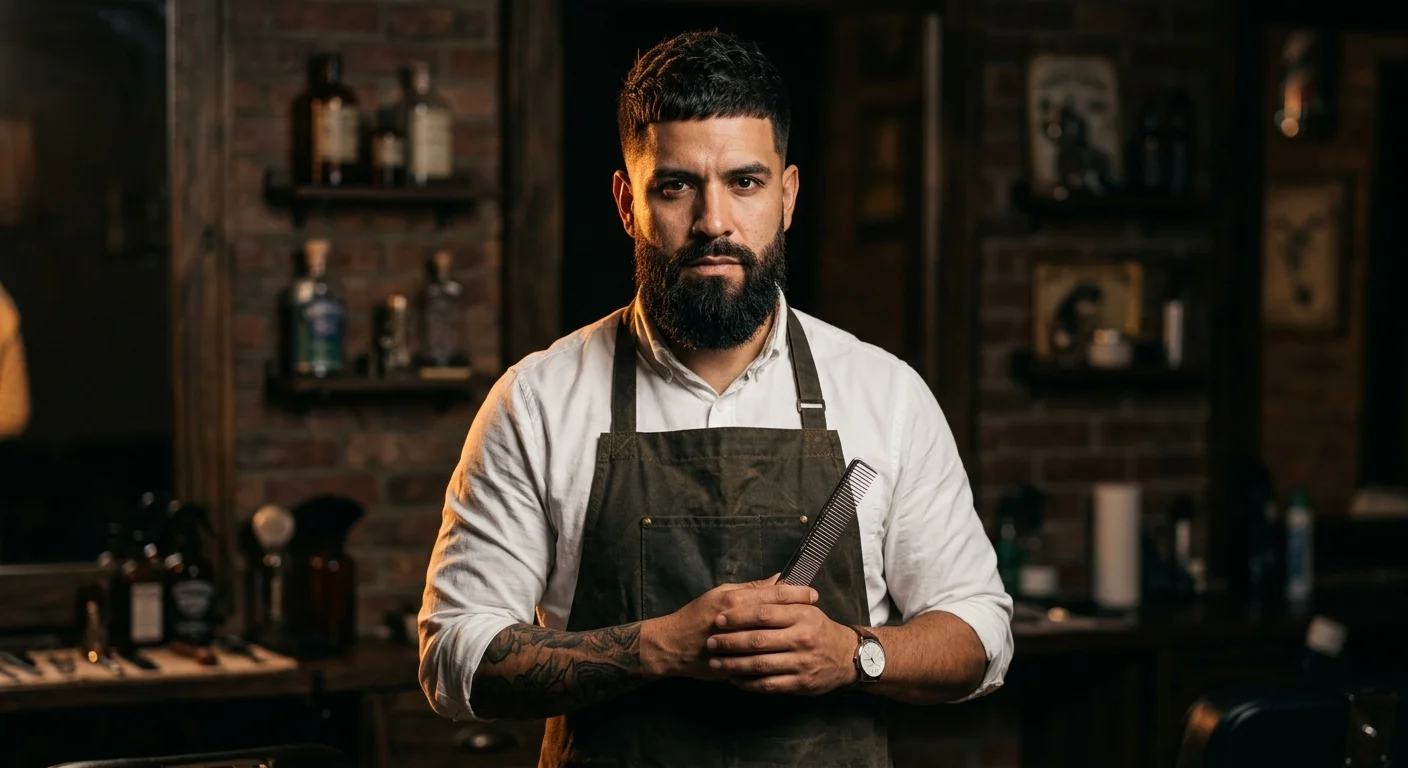
The barbering tradition that took hold in immigrant neighborhoods across Los Angeles in the twentieth century, Sicilian, Armenian, Russian, all shared a common backbone: an apprenticeship model where the trade was learned hands-on, over years, under a master barber, not through a six-month certificate program. Scissor work over clipper-only cuts. Straight razor confidence, because a straight razor forgives no mistakes and a barber trained on one develops a steadier hand for everything else. Hot towel steam as a non-negotiable step, not an upsell.
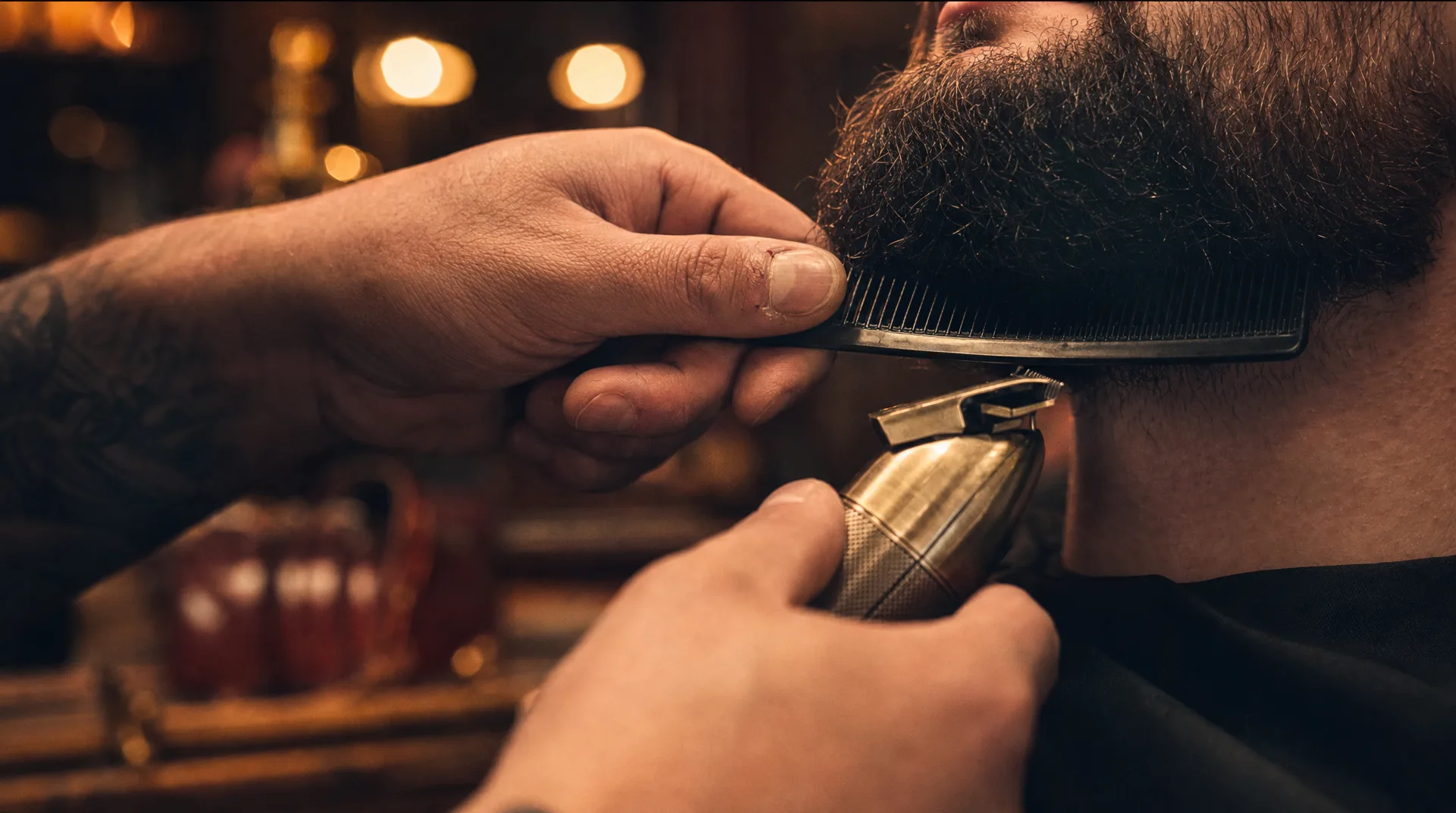
You can still feel the difference in a shop that carries that lineage. It shows up in small things: a barber who reaches for scissors before clippers out of instinct, not to look fancy for the customer. A neckline cut with a straight razor rather than a trimmer, because that's how it was taught, not because it's trendier. A full wash before and after every cut, not just when you ask for one.
The clearest surviving artifact of that apprenticeship is the shave itself, which is why it is the one service that has barely changed since the 1920s. We walked through the whole sequence, steam, lather, steel, and the cold towel at the end, in the art of the hot towel shave.
The chair as a third place
What the barbershop actually does for a community
Sociologists have a term, "third place," for the spaces that are neither home nor work but where community actually happens: the corner cafe, the neighborhood bar, the barbershop. In immigrant communities specifically, that function tends to run deeper. A barbershop is often one of the few spaces where three generations of men from the same background sit in adjacent chairs, where a language gets spoken freely that might not get spoken at the office, where news, gossip, and genuine support move around as naturally as small talk about the Dodgers.
That's not incidental to the haircut. It's a real part of why these shops matter beyond the service they provide. A grandfather bringing in a grandson for his first real haircut isn't just booking an appointment. He's handing off a small piece of continuity, in a space that's held that role for his own family for decades. If you are the one bringing a kid in for the first time, our family guide to school-year haircuts covers what to expect by age, including the four-year-old who is scared of the clippers.
The language of the chair
Code-switching, trust, and being known by name
Walk into a Valley barbershop with real roots in the community and you'll likely hear three languages inside the same ten minutes, English with one client, Armenian with the next, Russian with a third, sometimes all switched mid-sentence without anyone thinking twice about it. It's not performative. It's just how a genuinely mixed neighborhood talks to itself, and a barbershop that reflects that fluency earns a different level of trust than one that doesn't.
That trust shows up in the small things again: a regular who doesn't need to explain his usual, a barber who remembers a client's kid's name, a shop where a first-time visitor from outside the community is welcomed exactly as warmly as someone whose family has been coming for twenty years. The reputation for exclusivity that outsiders sometimes assume rarely survives an actual visit. If that assumption is the thing keeping you outside the door, what actually happens on a first visit is the short version: a consultation, a wash, a cut, and nobody testing whether you know the vocabulary.
Hospitality as craft
Why the drink in your hand is part of the haircut
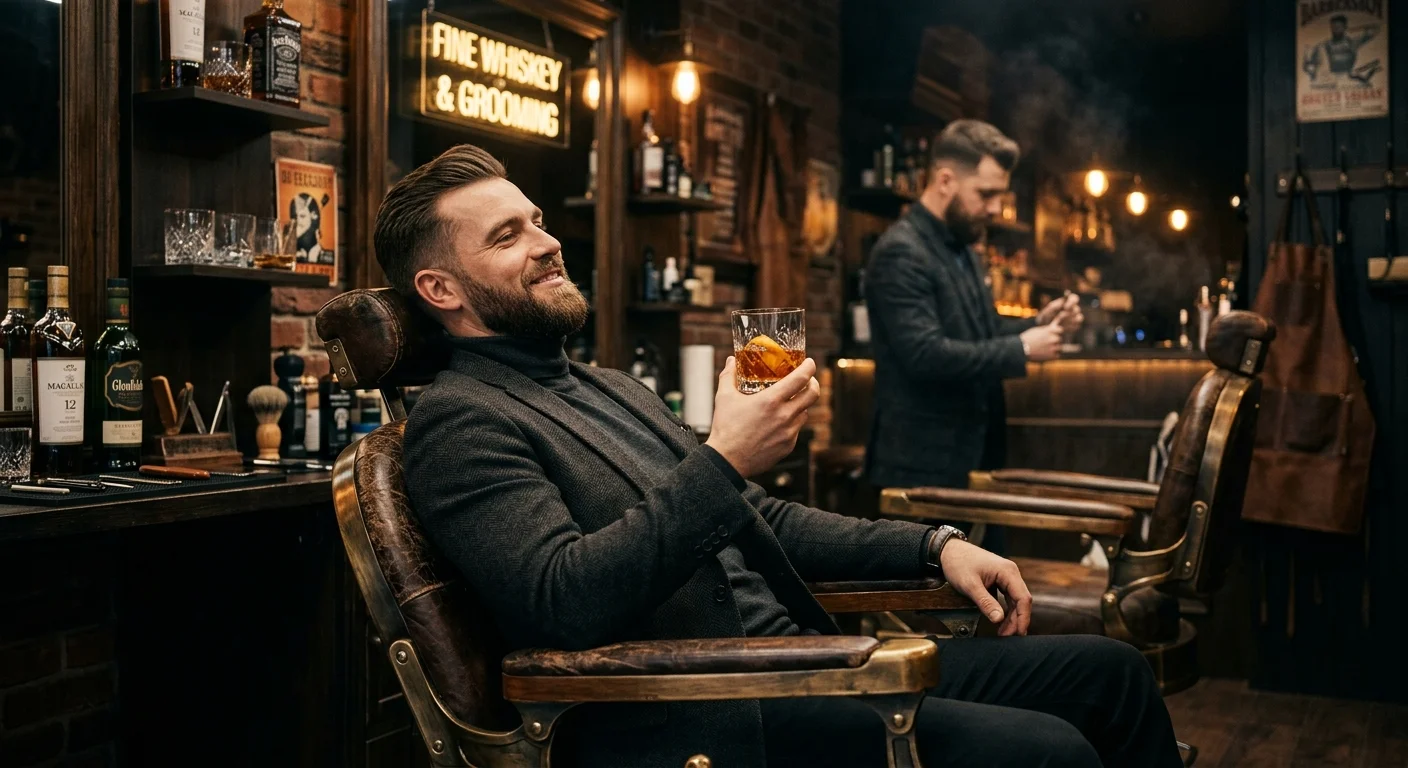
Offering a guest something to drink before he's even settled into the chair isn't a marketing flourish borrowed from some LA lifestyle-brand playbook. It's an old-country hospitality instinct, the same one that shows up at a family dinner table, applied to a barbershop. A guest is a guest, whether he's there for twenty minutes or an hour, and he's offered something before he's asked for anything.
That instinct is easy to fake and hard to actually execute well, which is why it tends to separate shops that have absorbed the tradition from shops that have just copied its aesthetic. A whiskey poured because a corporate brand guide called for "premium touches" feels different from one poured because that's simply how you treat someone who's walked through your door. Regulars can tell the difference within a visit or two, and it's a large part of why loyalty in these shops runs so deep and so quiet, rarely advertised, just repeated, month after month, for years.
A longer arc
How the eastern Valley became what it is
The wave of Armenian immigration that reshaped large parts of Los Angeles picked up through the later twentieth century, as families arriving from Armenia, Iran, Lebanon, and elsewhere in the diaspora settled across the city, with Glendale becoming the most visible concentration and the eastern San Fernando Valley, North Hollywood, Van Nuys, Valley Glen, Panorama City, growing into a large and steady community of its own, a few miles over the hill.
Small businesses followed the families, as they always do: markets, churches, bakeries, and barbershops among them, each one a small anchor point for a community rebuilding itself somewhere new. Barbering in particular travels well across borders. The tools are simple, the skill is portable, and a barber who trained in Yerevan or Tehran or Beirut can open a chair in the San Fernando Valley and be practicing the exact same craft within weeks, no license to reinvent, just a new street and the same steady hands.
That's the quieter history behind the barbershops on Victory Blvd today. Not a single dramatic founding story, but a slow, steady accumulation of families, trades, and shops, built the same patient way immigrant communities have always built themselves into a new city: one storefront, one chair, one regular customer at a time.
Three generations, one chair
What it looks like when the tradition actually gets passed down
The clearest evidence that a barbershop tradition is alive, rather than just decorative, is watching it move across generations inside the same room. It happens often enough in Valley shops with real roots to barely register as remarkable to the people involved: a grandfather in his seventies, still coming in every three weeks out of habit built over decades, his son now in his forties bringing his own boy in for his first real haircut, all three sitting within view of each other on a Saturday afternoon.
Nobody frames that moment as significant while it's happening. It's just Saturday. But it's also exactly the kind of continuity that a fifteen-minute chain cut, with a different stranger behind the chair every visit, structurally cannot offer. The barbershop remembers the family even when the family itself is too busy living its life to notice it's being remembered.
That's ultimately what the tradition protects, more than any specific haircut technique: a place where a family's rhythm gets marked, quietly, every few weeks, by people who've earned the right to know them well enough to do it right.
Dapper Fellas – Victory Blvd, Valley Glen
Our chairs reflect the neighborhood we're in. Several of our barbers speak Armenian, and Russian is spoken here too, alongside English as the everyday language of the shop. It's not a marketing point, it's just what it looks like to actually be from the community you're cutting hair in.
The craft leans the same direction: scissor work valued as much as clipper work, a straight razor line-up available on every beard service, a full wash before and after every cut, and the old-country hospitality instinct of offering a guest something to drink, top-shelf whiskey or cognac, before he's even sat all the way down. None of that is theater. It's just what the tradition looks like when it's practiced properly, whether the shop is on Brand Blvd or Victory Blvd.


Address: 13059 Victory Blvd, Valley Glen, CA 91606. Open every day, 10 AM to 8 PM. If you'd rather speak Armenian or Russian for your visit, just say so when you book or walk in, and we'll seat you with a barber who speaks your language.
Why it still matters
Against the fifteen-minute cut
It would be easy for this tradition to have faded out by now. Home clippers are cheap and decent. Chain shops promise a haircut in fifteen minutes for less than half the price. Plenty of men, especially younger ones, have never sat through a hot towel or watched a straight razor get stropped and would happily go their whole lives without it.
But the tradition hasn't faded, and it isn't nostalgia keeping it alive. It's that the actual experience, the craft, the conversation, the sense of being known rather than processed, still meets a need that a fifteen-minute cut doesn't touch. In a neighborhood built by immigrants who understood a barbershop as more than a haircut, that need was never going away. It's why the chairs on Victory Blvd stay full, generation after generation, whether or not the rest of the city is paying attention.
FAQ
No, and the assumption that you might is the single most common thing that keeps first-timers outside the door. These shops run on regulars and reputation, which makes them more welcoming to newcomers, not less. Everyone gets the same wash, the same hot towel, and the same offer of a drink.
Glendale gets the attention, but the eastern Valley, Valley Glen, North Hollywood, Van Nuys, and Panorama City, holds one of the largest Armenian-American communities in the country, and the barbering tradition has been running here for decades. Dapper Fellas is on Victory Blvd in Valley Glen.
Yes. Several of our barbers speak Armenian, Russian is spoken here too, and English is the everyday language of the floor. Say which you would prefer when you book or when you walk in and we will seat you with a barber who speaks it.
Scissor work valued as much as clipper work, a straight razor used on the neckline rather than a trimmer, a full wash before and after every cut, and a hot towel treated as a standard step rather than an upsell. It comes from a trade learned over years under a master barber, not a short certificate course.
Included. Every visit comes with a head wash, a hot towel, and your choice of a drink, whiskey or cognac. Offering a guest something before he has asked for anything is an old-country hospitality instinct, not a line item.